
Three Pull-Ups Became a Warm-Up. Then He Learned His First Muscle-Up.
Three Pull-Ups Became a Warm-Up. Then He Learned His First Muscle-Up.
Three pull-ups can feel like a huge achievement.
Eventually, they might become your warm-up.
When Sasha started training with me three years ago, he could barely perform three pull-ups.
Three years later, he described pull-ups as part of her warm-up. He had also recently achieved his first strong muscle-up and handstand and was beginning to work toward the front lever.
That is exactly why I love calisthenics.
Your old limits become new warm-ups.
Strength Has a Habit of Sneaking Up on You
When you are a beginner, every rep matters.
Three pull-ups feels like a workout.
Then you reach five. Then eight. Then 10.
One day, you realize you have become strong enough that the thing that used to challenge you is now part of your warm-up.
That moment is incredibly satisfying.
Because strength does not always feel dramatic while it is happening.
You train. You repeat. You recover. You come back.
Then one day y...
Strength Training Can Change More Than Your Body
Strength Training Can Change More Than Your Body
What if your fitness journey became the place where you learned how to face the things you've been avoiding?
Renita has trained with me for around three and a half years.
In her testimonial, she described the experience as much bigger than physical transformation.
She talked about becoming stronger, confronting weaknesses, overcoming self-doubt, and developing a deeper connection with herself through her fitness journey.
That is one of the reasons I love training.
Because your body is part of the process.
But so is your mind.
Strength Gives You Proof
You cannot fake a pull-up.
You cannot fake a handstand.
You cannot fake a controlled squat.
Your body gives you honest feedback.
Either you can hold the position or you cannot.
Either you can perform the movement or you need more practice.
That honesty can be incredibly useful.
You learn to confront your current ability without making it mean something negative about you....
The Gym Wasn't Working for Him Anymore. Calisthenics Was.
The Gym Wasn't Working for Him Anymore. Calisthenics Was.
What happens when you discover a style of training that actually fits the way you want to live?
David had trained in different environments and traveled extensively.
He worked with me in person and through online courses while traveling around the world.
Over time, he developed a stronger passion for calisthenics, improved his mobility, and eventually stopped going to the gym completely.
That is an interesting shift.
Because plenty of people think fitness requires a specific place.
A commercial gym. A machine. A rack. A perfect setup. A two-hour training window.
Calisthenics changes that equation.
Your Body Is the Equipment
You can train a push-up almost anywhere.
Squats are available anywhere.
Lunges are available anywhere.
Planks are available anywhere.
Mobility work is available almost anywhere.
Add a pull-up bar or simple equipment and your options expand dramatically.
That flexibility matters for busy pe...
Why Better Form Can Take Your Calisthenics to Another Level
Why Better Form Can Take Your Calisthenics to Another Level
You can be strong enough to do a movement and still have a lot of room to improve it.
Mike had already made progress before reaching the level he wanted.
Through our training, he achieved skills including the muscle-up and back lever while continuing to work on his handstand and full front lever.
Yet one of the things he highlighted most strongly was form.
That matters.
Because calisthenics is full of people chasing the next skill.
First pull-up. Then 10. Then muscle-up. Then handstand. Then front lever.
The temptation is always to ask:
Can I do it?
A better question is:
How well can I do it?
There Is a Big Difference
You can muscle your way through a difficult movement.
You can swing. You can compensate. You can shorten the range. You can lose your body position. You can find a way to complete the rep.
But completing the movement and owning the movement are two different experiences.
Mike described the coa...
Hip Internal Rotation Exercises for Lower Back Pain: Fix Your Hips, Ankles & Feet
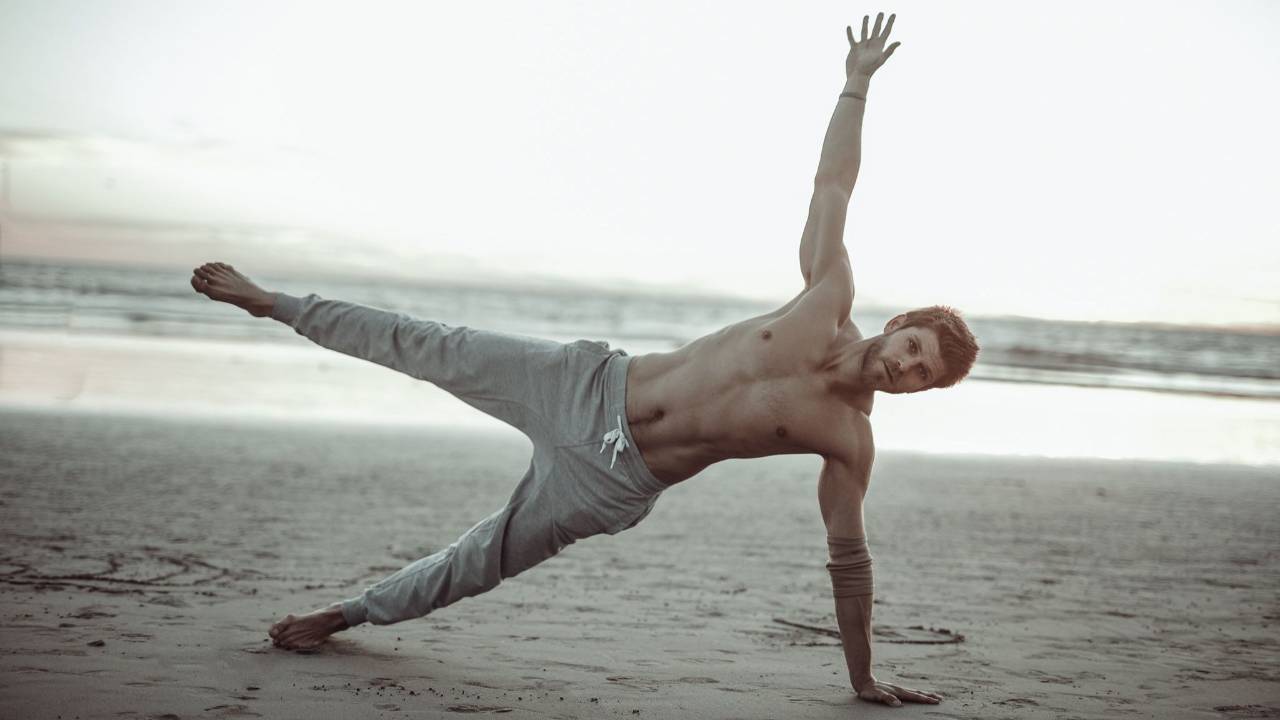
Hip Internal Rotation Exercises for Lower Back Pain: Fix Your Hips, Ankles & Feet
When people deal with lower back pain, the conversation usually starts and ends with the lower back.
Stretch the lower back. Strengthen the core. Release the tight muscles. Improve your posture.
The lower back gets all the attention.
Your hips often get ignored.
That matters because the hips are designed to move. They flex, extend, rotate, abduct, and adduct. When the hips struggle to access certain ranges of motion, other parts of the body have to compensate.
One area that deserves far more attention is hip internal rotation.
Hip internal rotation is the ability of your thigh bone to rotate inward within the hip joint. It plays an important role in how your hips, knees, pelvis, and lower body move together.
Many people spend plenty of time working on hip mobility while missing a huge piece of the puzzle: training hip internal rotation in different positions, especially positions where the hip...
Progress in Calisthenics Is Never a Straight Line

Progress in Calisthenics Is Never a Straight Line
If you've been training for a while, you've probably noticed something.
Progress doesn't follow a straight line.
Some weeks you feel stronger than ever. Other weeks your numbers stay the same. Occasionally, you even take a step backward.
That's completely normal.
The biggest mistake many people make is believing progress only means adding more reps, lifting more weight, or learning a new skill every month.
Real progress is much bigger than that.
As you gain experience with calisthenics, your definition of success changes. The goals that once felt impossible eventually become your new normal. Once you achieve them, you naturally start looking toward the next challenge.
That's one of the reasons I love calisthenics.
There is always another level to reach, another movement to refine, or another aspect of your health to improve.
Your Definition of Progress Changes With Age
I'm 46 years old.
When I started training in my late...
Real Calisthenics Transformations: What Progress Can You Expect?

Real Calisthenics Transformations: What Progress Can You Expect?
Starting calisthenics raises plenty of questions. How many pull-ups do you need before learning a muscle-up? Can you build strength if you cannot do a single pull-up? Is bodyweight training effective for weight loss, posture, or recovering from injuries?
The answer is yes.
Calisthenics gives you a proven path to build strength, develop impressive skills, improve mobility, and create a body that performs well in everyday life. Every athlete starts from a different place, yet the principles remain the same. Consistent practice, smart programming, and progressive overload produce incredible results.
Over the years, I've coached hundreds of people with different fitness levels, ages, and backgrounds. Some arrived unable to perform one pull-up. Others wanted to unlock advanced skills like the muscle-up, handstand, or front lever. Many also wanted to lose weight, eliminate pain, or move better.
The following success st...
The Calisthenics Rule Most Beginners Ignore: The Key to Strength and Pain-Free Movement
The Calisthenics Rule Most Beginners Ignore: The Key to Strength and Pain-Free Movement
There’s a reason calisthenics continues to outperform most training methods when it comes to building a strong, capable, and pain-free body.
It works with your body, not against it.
And at the center of that effectiveness sits a principle that most people ignore. The golden ratio of calisthenics training.
If you apply it correctly, your strength improves faster, your joints feel better, and your body starts moving the way it was designed to move.
If you ignore it, you create imbalances that limit your progress and eventually lead to pain.
Let’s break it down.
Why Calisthenics Builds a Better Body
Calisthenics stands out because it prioritizes movement quality, control, and structural balance.
A typical calisthenics beginner quickly realizes something important. Progress does not come from adding more weight. It comes from mastering your body.
And when you start mastering your body, one...
The Detail That Changes Everything in Calisthenics Strength
The Detail That Changes Everything in Calisthenics Strength
Extending my arms, at the bottom of a muscle up, felt impossible in my 30s.
Now it’s part of my training in my 40s.
Not perfect. Not flashy. Yet deeply meaningful.
That’s what makes calisthenics powerful.
Progress doesn’t scream for attention. It builds quietly. Day after day. Rep after rep. Most people miss it because they chase big milestones. The real ones happen in the background.
If you’re a calisthenics beginner, this is the mindset that changes everything. You’re not chasing overnight transformations. You’re building control, awareness, and strength that compounds over time.
And when you start to feel that progress, everything shifts.
The Progress You Can’t See… But You Can Feel
Most people measure progress with numbers.
More reps. More sets. More advanced skills.
That’s one way to do it. It’s not the full picture.
In calisthenics, the most important progress is internal. It’s the subtle improvement in j...
The #1 Calisthenics Exercise for a Lean, Strong Physique (And How to Master It)
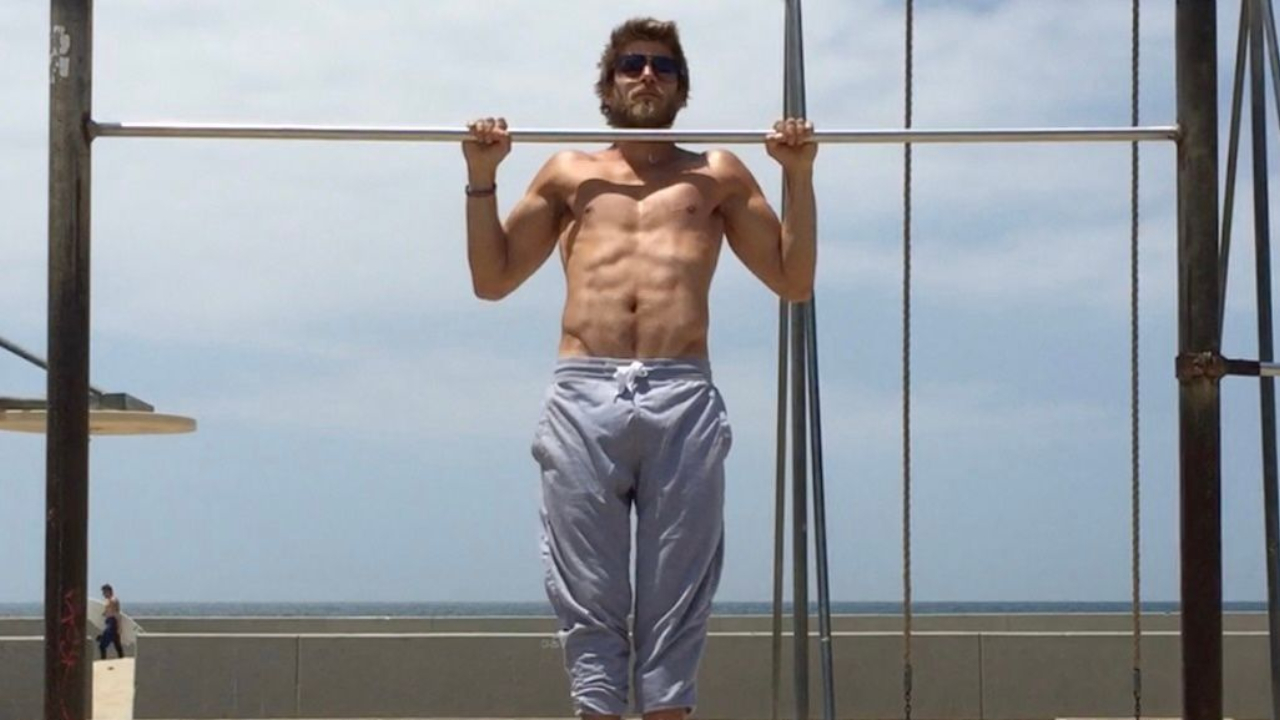
The #1 Calisthenics Exercise for a Lean, Strong Physique (And How to Master It)
If you had to choose a single exercise and commit to it for life, the answer is clear.
The pull-up wins.
In the world of calisthenics, the pull-up stands at the top. It builds strength, control, muscle, and resilience in a way that very few movements can match.
Yes, dips and squats deserve a place in the conversation.
They complete the foundation of a powerful bodyweight training system.
That is a discussion for another time.
Today, we focus on the movement that defines upper body strength.
If you are serious about building a strong, athletic physique, it is definitely time to get started with pull-ups.
Why the Pull-Up Dominates Calisthenics
The pull-up is not another exercise you add to your routine.
It is the foundation of upper body pulling strength.
It demands effort, coordination, and discipline. It rewards you with real, visible results.
When you perform a pull-up, you are lifting you...
