
Go From 0 To 20+ Pull Ups! The Ultimate Pull Up Workout Plan!

Ready to master pull-ups?
This is your ultimate pull-up workout plan, designed to take you from 0 pull-ups to 20+ clean reps step by step.
In this complete guide, you’ll learn:
✅ How to get your very first pull-up
✅ The best pull-up equipment for beginners
✅ How to build strength and add more reps
✅ Progressions to double your numbers once you hit 5
✅ And how to unlock the muscle-up after you’ve built a solid pull-up base
Pull-ups are one of the best exercises for building a strong back, powerful arms, and unstoppable calisthenics strength.
Whether you’re a beginner or already doing a few reps, this video gives you the exact workout plan to keep progressing.
Watch the full video here and get your full pull up training roadmap!
Nicolas
PS: Join the Online Calisthenics Academy and train with me here!
Stuck at 1 Pull-Up? Do This to Get More!
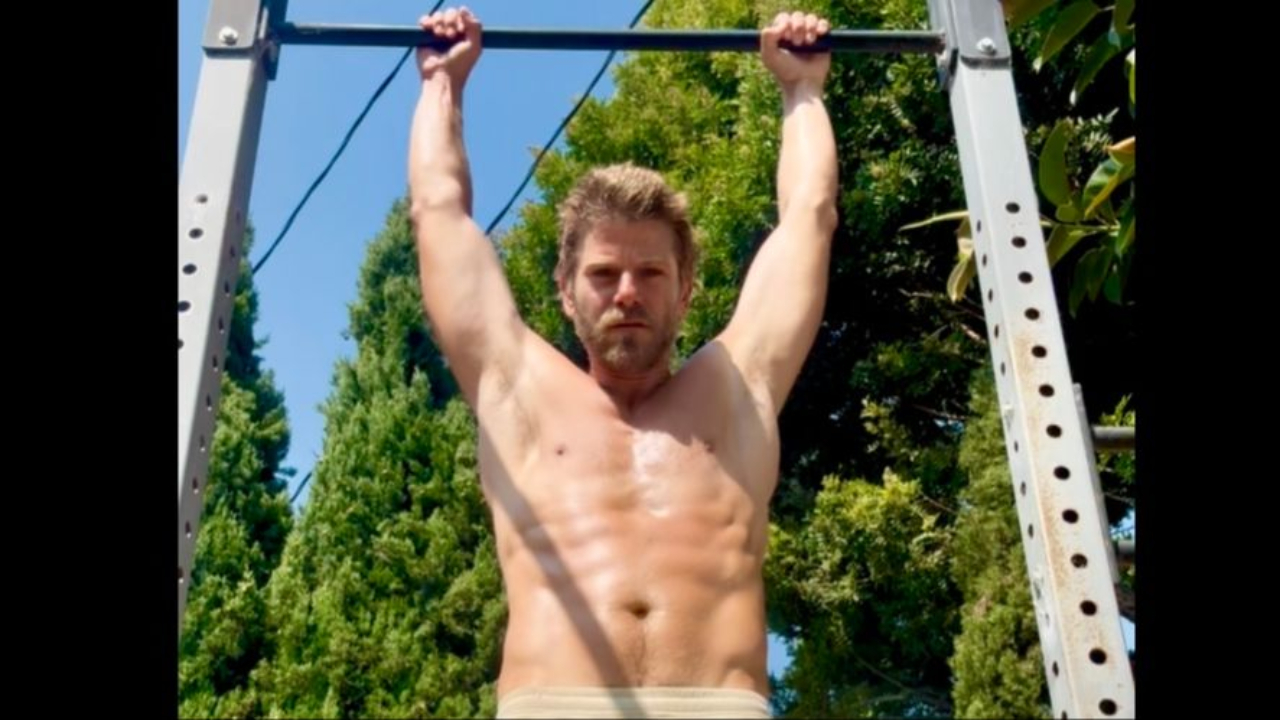
Stuck at 1 Pull-Up? Do This to Get More!
You’ve finally done it.
Your chin cleared the bar, your arms didn’t give out, and you felt like a boss for a second.
That first pull-up? Huge win.
But this isn’t the end of the journey. It’s the beginning.
So let’s talk about what to do next and how to level up your bodyweight strength with smart, fun, and effective calisthenics training.
This guide is especially for you if you’re getting into calisthenics as a beginner and want real results, not gimmicks.
Whether your goal is to master more reps, build back muscle, and a healthy posture, this is how you make it happen.
Step 1: Get Really Good at That One Pull-Up
We’re not here to crank out sloppy reps. One perfect pull-up is worth ten half-reps any day.
So focus on:
-
Hollow body position: engage your core, keep your legs together
-
Controlled movement: no swinging, no kipping, no momentum
-
Full range of motion: chin clearly over the bar, arms fully extended at the bot...
Best Pull-Up Equipment for Beginners! (Video)

Best Pull-Up Equipment for Beginners!
If you’ve been stuck on pull-ups or don’t even have the right set up to start, this is for you.
I just released a new video breaking down the best equipment for pull-ups, from zero-gear hacks to more advanced tools you can use at home or outdoors.
Whether you’re a total beginner or already working on your pull ups, the right setup changes everything.
🎥 Watch the video here and upgrade your pull-up game!
Let’s go!
Nicolas
PS: Train with me here!
Still Can't Do a Pull Up, Try This

Still Can't Do a Pull Up, Try This!
Pull ups are the gold standard of upper body strength.
They’re challenging, humbling, and wildly rewarding.
Whether you’re already training or just getting started, mastering the pull up is a must.
Your back is the biggest muscle group in your upper body. Ignoring it isn’t an option.
And nothing targets it better than a well-executed pull up.
But most people don’t know how to actually train for one.
So here’s a clear, progressive path that works, if you follow it with consistency.
Let's get your first pull up, step-by-step.
Nicolas
The Only 4 Calisthenics Exercises You Need for Life

The Only 4 Calisthenics Exercises You Need for Life
If I could only pick 4 calisthenics exercises for the rest of my life, what would it be?
I had this question circle back around many times and that's a tough one!
But these would be my picks:
-
Wide Pull-Ups – The king of pulling exercise.
-
Pike Push-Ups – The go-to for overhead pressing strength.
-
Bulgarian Split Squats – The best single-leg lower-body builder.
-
Hanging Leg Raises – The king of core exercises.
These four movements cover every major muscle group, maximizing strength and control with just your bodyweight.
Whether you’re building muscle, improving mobility, or mastering body control, these exercises form a rock-solid foundation for your calisthenics workout.
Let’s break down why they should be staples in your training routine.
1. Wide Pull-Ups
Why They Work
Wide pull-ups are the gold standard for upper-body pulling strength.
By using a grip wider than shoulder-width, you put greate...
The Power Move You Didn’t Know You Needed!
The Power Move You Didn’t Know You Needed!
If you’re diving into calisthenics, let’s start with something foundational—no, not flashy handstands or flips—just hanging around.
Yes, literally hanging.
The deadhang is probably the simplest-looking move in calisthenics for beginners, but don’t underestimate it!
This move is a lot more than it looks and will boost your journey toward a stronger grip, bulletproof shoulders, and that first pull-up you’ve been dreaming about.
Think you can already hang from a bar? Hold up—most people can’t last 10 seconds! This move is crucial because it sets up everything else in calisthenics.
Here’s why the deadhang should be your new best friend, how to nail it, and a quick guide on adding it to your training so you can actually get somewhere with your goals.
Why Start with the Deadhang?
In calisthenics, we’re building full-body strength, and that includes everything from your fingertips down to your toes.
The deadhang activates your entire mus...
How to Build Strong Back Muscles and Fix Imbalances
How to Build Strong Back Muscles and Fix Imbalances.
My One-Arm Pull-Up Journey
The calisthenics journey is all about grit, discipline, and hard work.
I’ve spent countless hours pushing myself to master the moves that seemed impossible at first.
Muscle-ups, front levers, back levers, the human flag, handstands—these are the milestones I worked towards.
I broke through personal limits, completing 25 pull-ups in one set, 100 push-ups in another.
But there is one move that I haven't tackled, one that’s undebatably one of the hardest in calisthenics: the one-arm pull-up.
It wasn’t on my radar until recently.
But I decided it was time to confront this challenge. If you're serious about building a strong back and fixing imbalances, it’s time to add this into your calisthenics workout routine too.
Why the One-Arm Pull-Up?
The one-arm pull-up is a beast of a move. The best thing about it is that it doesn't look anywhere close to how hard it actually is.
It tests more than just s...
Boost Your Pull-Up Strength with Assisted One-Arm Pull-Ups
Boost Your Pull-Up Strength with Assisted One-Arm Pull-Ups
Increasing your pull-up strength is a key component of any effective calisthenics workout plan.
One of the most challenging and rewarding exercises to master is the one-arm pull-up. It not only builds immense upper body strength but also improves grip and coordination.
If you're looking to elevate your pull-up game, incorporating assisted one-arm pull-ups into your routine is a great way to progress towards this advanced move.
Why Focus on One-Arm Pull-Ups?
The one-arm pull-up is a pinnacle of calisthenics training. It requires significant strength, stability, and technique, making it a coveted skill among calisthenics enthusiasts.
However, jumping straight into one-arm pull-ups without proper preparation can lead to frustration and potential injury. That’s where assisted one-arm pull-ups come in—they allow you to gradually build the necessary strength and control in a safe and effective manner.
The Technique: Finger-Ass...
Pull ups: 5 Proven Strategies for More Reps (or get your first one)!

Pull ups: 5 Proven Strategies for More Reps (or get your first one!)
The pull-up. It's a rite of passage in the fitness world, a test of upper body strength, and a gateway to a sculpted physique.
But what if you're stuck at a plateau, unable to add reps or feeling miles away from that elusive first pull-up?
Don't worry, whether you're a beginner or an experienced athlete, these 5 strategies will help you break through plateaus and achieve new personal records. If you can't do a pull up yet, apply the same strategies with assisted pull up variations, such as those mentioned at the end of the article!
1 - The High Volume Approach: Quantity Meets Quality
For those serious about mastering pull-ups, the high volume approach is a game-changer. Here's how to implement it:
- Train pull-ups 3 times a week
- Aim for 100-200 reps per session. Use combinations that challenge you.
- Push yourself to failure (not every set, but most). If needed, once fatigue starts to make a real impact and ...
How to Start Calisthenics: 7 Steps To Pull Ups
How to Get Your First Pull Up (Without the Guesswork)
Pull ups are the gold standard of upper body strength.
They’re challenging, humbling, and wildly rewarding.
Whether you’re already training or just getting started, mastering the pull up is a must.
If you're exploring calisthenics as a beginner, know this: your back is the biggest muscle group in your upper body.
Ignoring it isn’t an option. And nothing targets it better than a well-executed pull up.
But here’s the catch: most people don’t know how to actually train for one.
Let’s break it down.
1. Standing Pull Ups
Start by using your legs for assistance. Find a low bar and stand in front of it, pulling yourself forward toward the bar while keeping your back straight and feet on the ground.
The key is learning to initiate the movement with your shoulder blades. Think: blades pull in as you move forward, and glide forward as you move away from the bar.
Go for 5–10 reps per arm, 3–5 sets. Once that feels easy, move on...
